1. Location Matters:
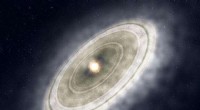
* Further from the Sun: The outer planets formed far from the young Sun, where the solar nebula was much colder and less dense. This meant that ices, like water, methane, and ammonia, could condense and solidify along with rock and dust.
2. Building Blocks:
* Ice Giants (Uranus and Neptune): While still containing rocky cores, the bulk of Uranus and Neptune are made up of heavier elements like ices and a significant amount of hydrogen and helium. They likely formed through a process called "core accretion," where a small rocky core attracted and gathered ice and gas.
* Gas Giants (Jupiter and Saturn): The giant planets, Jupiter and Saturn, are primarily composed of hydrogen and helium, with smaller amounts of heavier elements. Their formation involved a similar process of core accretion, but the much larger size of these planets allowed them to capture vast quantities of gas directly from the surrounding nebula.
3. Solar Wind and Gravity:
* Solar Wind: As the Sun matured, it emitted a powerful solar wind that pushed the remaining lighter gases outwards. This process, called "solar wind clearing," likely halted the growth of the outer planets, contributing to their distinct composition.
* Gravity: The immense gravity of the gas giants, once formed, continued to attract and hold onto large amounts of gas.
In summary:
* The outer planets formed farther from the Sun where temperatures allowed for the formation of ices.
* They formed from a mixture of rock, ice, and gas, with the gas giants capturing vast amounts of hydrogen and helium.
* The solar wind played a crucial role in shaping their composition, limiting their growth and pushing lighter gases outward.
This process, known as core accretion, explains the formation of all four outer planets, with variations in their composition depending on their distance from the Sun and the amount of gas they were able to capture.