Here's a simplified timeline:
* Early Solar Nebula: The initial cloud of gas and dust began to collapse, forming a disk around a central proto-sun.
* Planetesimals: Small, rocky and icy bodies called planetesimals started forming through collisions and accretion of dust and gas.
* Inner Planets: The inner planets (Mercury, Venus, Earth, Mars) formed first, primarily from rocky planetesimals due to the intense heat from the young Sun.
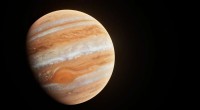
* Outer Planets: The outer planets (Jupiter, Saturn, Uranus, Neptune) formed later, primarily from icy planetesimals and gas, as the outer solar system remained cooler.
Evidence for this staggered formation:
* Isotopic Dating: Scientists can date the formation of different planets and their moons by examining the ratios of radioactive isotopes in their rocks.
* Compositional Differences: The inner planets are primarily rocky, while the outer planets are gas giants.
* Orbital Properties: The planets have slightly different orbital inclinations and eccentricities, which can be explained by their formation over time.
It's important to note that our understanding of the formation of the solar system is constantly evolving as new data and theories emerge.