Stars:
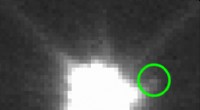
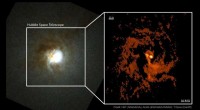
* Betelgeuse: This red supergiant is Orion's shoulder, a variable star that pulsates and changes in brightness. It's one of the largest stars known, and if it were in our solar system, it would extend past the orbit of Jupiter!
* Rigel: Orion's blue supergiant foot, Rigel is one of the brightest stars in the night sky. It shines with a brilliance that is 40,000 times greater than our sun.
* Bellatrix: The "Amazon Star," this blue giant is Orion's other shoulder.
* Alnitak, Alnilam, and Mintaka: These three stars form Orion's belt, a defining feature of the constellation.
* Saiph: The blue-white supergiant, Saiph, forms Orion's lower right leg.
Other Notable Features:
* Orion Nebula (M42): A giant cloud of gas and dust where new stars are being born. It's visible to the naked eye and even more spectacular through binoculars or a telescope.
* Horsehead Nebula (B33): This dark nebula is shaped like a horse's head, a silhouette against the glowing gas of the Orion Nebula.
* Trapezium Cluster: A group of four young, hot stars in the Orion Nebula, which can be seen with a small telescope.
* Barnard's Loop: A vast loop of glowing gas that encircles much of Orion.
Cultural Significance:
* Orion is one of the oldest and most widely recognized constellations, appearing in mythologies and folklore across the globe.
* The constellation is associated with the hunter Orion in Greek mythology.
Overall, Orion is a treasure trove of celestial objects, showcasing the beauty and wonder of the night sky. Its combination of bright stars, nebulae, and cultural significance makes it a truly special constellation.