Generally:
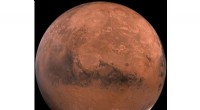
* Not very bright: Mars is generally fainter than the brightest stars in the night sky, but brighter than most.
* Variable brightness: It can appear as a bright reddish "star" at times, and barely visible at others.
Factors affecting brightness:
* Opposition: When Mars is closest to the Earth and directly opposite the Sun in the sky, it appears brightest. This happens roughly every 26 months and Mars can reach magnitude -2.9, rivaling Jupiter in brightness.
* Conjunction: When Mars is on the same side of the Sun as Earth, it appears faintest. This happens roughly every 26 months and Mars can reach magnitude +1.8, around the brightness of Polaris (the North Star).
* Distance from Earth: The closer Mars is to Earth, the brighter it appears.
* Time of night: Mars' brightness can also vary based on how high it is in the sky.
How to observe Mars:
* Use a star chart or app: They can show you where Mars is located in the night sky.
* Find a dark sky location: Away from city lights, you'll have a better view.
* Use binoculars or a telescope: To see more detail on the planet's surface.
In summary: While not always a dazzling object, Mars can be a beautiful sight in the night sky when it is at its brightest.