Galaxy evolution refers to the changes that galaxies undergo over vast cosmic timescales. Think of it like a grand, slow-motion movie, where galaxies form, grow, interact with each other, and eventually even decline. It's a fascinating process that tells us a lot about how the Universe itself evolved.
We want to learn about:
* How galaxies form: From the initial clumping of matter in the early Universe to the development of their distinct shapes, sizes, and compositions.
* How galaxies grow: Through mergers, accretion of gas, and internal processes like star formation.
* How galaxies interact: Collision and gravitational influence among galaxies, which can drastically change their appearance and evolution.
* The role of dark matter and dark energy: These mysterious components play crucial roles in galaxy formation and evolution.
Telescopes are our eyes into the distant Universe, and they allow us to study galaxy evolution in several ways:
1. Looking Back in Time:
* Light Travel Time: Light takes time to travel across the Universe. So when we observe a distant galaxy, we are seeing it as it was billions of years ago. This gives us a snapshot of the Universe at different stages of its evolution.
* Redshift: As the Universe expands, light from distant galaxies stretches, making it appear redder. This redshift is a direct measure of the distance and age of the galaxy.
2. Observing Different Galaxy Types:
* Young galaxies: Found in the early Universe, these galaxies are typically small, irregular, and undergoing rapid star formation.
* Mature galaxies: Older galaxies found closer to us, which have a more developed structure, less intense star formation, and possibly a central supermassive black hole.
3. Studying Galaxy Properties:
* Morphology: Analyzing the shape and structure of galaxies (spiral, elliptical, irregular) to understand their evolutionary path.
* Star Formation Rate: Measuring how quickly stars are forming in a galaxy, which tells us about its current stage of activity.
* Chemical Composition: Studying the elements present in a galaxy, which reveal the history of star formation and evolution within it.
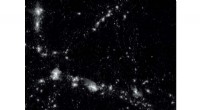
* Deep field images: The Hubble Space Telescope's deep field images reveal galaxies in their early stages, billions of years ago, with different shapes and properties than the galaxies we see closer to home.
* Merging galaxies: Telescopes observe galaxies in the process of merging, providing evidence of how such interactions can lead to the formation of elliptical galaxies and the growth of central black holes.
* Cosmic Microwave Background Radiation (CMB): The CMB, a faint afterglow of the Big Bang, provides information about the early Universe and the conditions that gave rise to the first galaxies.
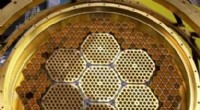
Galaxy evolution is a vast and complex field with ongoing research and discoveries. New telescopes like the James Webb Space Telescope are opening new windows into the Universe, allowing us to study galaxies in greater detail and refine our understanding of their evolution.
By studying galaxies across space and time, we are piecing together a grand narrative of the Universe, understanding how the cosmos we see today came to be.