1. Supernova Remnants:
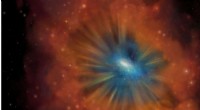
* When massive stars reach the end of their lives, they explode in a spectacular supernova event.
* This explosion blasts the star's outer layers into space, creating a shockwave that sweeps up surrounding gas and dust, forming a nebula.
* These are often bright and colorful, like the Crab Nebula.
2. Stellar Winds:
* Even less massive stars, like our Sun, release powerful stellar winds that can push gas and dust away from them.
* Over time, these winds can create large, expanding bubbles of gas known as planetary nebulae (though they have nothing to do with planets).
* These nebulae are often characterized by intricate shapes and vibrant colors.
3. Molecular Clouds:
* These are vast, cold, and dense regions of space where new stars are born.
* The gravitational collapse of material within these clouds leads to the formation of stars.
* The remaining gas and dust in the region can be illuminated by the newly formed stars, creating bright, colorful nebulae, like the Orion Nebula.
4. Interactions between Galaxies:
* When galaxies collide, the gravitational forces involved can trigger massive star formation.
* This can lead to the creation of large, energetic nebulae within the interacting galaxies.
5. Galactic Outflows:
* Active galactic nuclei (AGN), powered by supermassive black holes at the center of galaxies, can launch powerful jets of gas and particles.
* These jets can interact with surrounding gas and dust, creating bright nebulae, like those seen in the Centaurus A galaxy.
In summary, nebulae are formed through a variety of processes, including:
* Stellar death and explosions (supernovae)
* Stellar winds from normal stars
* The birth of new stars within molecular clouds
* Interactions between galaxies
* Activity from galactic nuclei
These processes are constantly shaping and reshaping the universe, creating the stunning and awe-inspiring nebulae we observe.