1. Telescopes:
* Optical Telescopes: While not specifically designed for high-energy objects, optical telescopes can observe visible light emitted by these objects, revealing their structure and evolution. Large telescopes like the Very Large Telescope (VLT) are used for this purpose.
* X-ray Telescopes: X-rays are emitted by extremely hot and energetic objects, like supernova remnants and accretion disks around black holes. X-ray telescopes, such as Chandra X-ray Observatory and XMM-Newton, allow scientists to study these high-energy processes.
* Gamma-ray Telescopes: Gamma rays are the highest energy form of electromagnetic radiation, emitted by the most violent cosmic events. Telescopes like the Fermi Gamma-ray Space Telescope and the upcoming Cherenkov Telescope Array (CTA) allow us to study gamma-ray bursts, active galactic nuclei, and pulsars.
* Radio Telescopes: While not directly focused on high-energy phenomena, radio telescopes can observe the radio waves emitted by pulsars, providing valuable information about their magnetic fields and rotation. Arrays like the Very Large Array (VLA) and the Atacama Large Millimeter/submillimeter Array (ALMA) are used for this purpose.
2. Spacecraft:
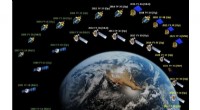
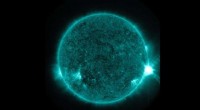
* Spacecraft with Instruments: Specialized spacecraft are sent to observe high-energy objects in detail. Examples include the Hubble Space Telescope, the Solar Dynamics Observatory (for observing solar flares), and the Juno spacecraft (for studying Jupiter's magnetic field).
* Interferometers: These arrays of telescopes work together to create a single large virtual telescope. The Very Long Baseline Array (VLBA) is an example, used to study the structure of distant galaxies and active galactic nuclei.
* Gravitational Wave Detectors: These detectors, such as LIGO and Virgo, are sensitive to the ripples in spacetime caused by massive events like colliding black holes or neutron stars. This opens up a completely new window for studying these events.
3. Data Analysis Tools:
* Computational Modeling: Scientists use complex computer simulations to model the physics of high-energy objects, including supernova explosions, black hole accretion, and pulsar emissions.
* Artificial Intelligence (AI): AI algorithms are increasingly being used to analyze massive amounts of data from telescopes and spacecraft, identifying patterns and making discoveries that would be difficult to find by humans alone.
4. Collaboration:
* International Collaboration: The study of high-energy objects often involves collaborations between researchers from different countries and institutions, pooling resources and expertise.
These technologies work together to provide a comprehensive understanding of the universe's most energetic phenomena, offering valuable insights into the fundamental laws of physics and the evolution of the cosmos.