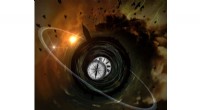
1. Objects that emit their own light:
* Stars: These are giant balls of hot gas that generate their own light and heat through nuclear fusion reactions in their cores. They are the most common source of light in the universe.
* Supernovae: These are powerful explosions that occur at the end of a star's life. They emit an incredibly intense burst of light, sometimes outshining entire galaxies for a short period.
* Active Galactic Nuclei (AGN): These are the extremely bright centers of galaxies, powered by supermassive black holes accreting matter. They can emit vast amounts of light across the electromagnetic spectrum.
* Pulsars: These are rapidly rotating neutron stars that emit beams of radiation from their magnetic poles. As they spin, these beams sweep across space, appearing as pulses of light to observers on Earth.
* Quasars: These are extremely distant and luminous AGN. They are among the most energetic objects in the universe.
2. Objects that reflect light from other sources:
* Planets: Planets do not emit their own light but reflect sunlight. Their brightness depends on their size, reflectivity (albedo), and distance from the Sun.
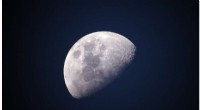
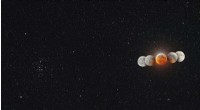
* Moons: Similar to planets, moons also reflect light from their host star (typically the Sun).
* Asteroids: These are rocky bodies orbiting the Sun. They reflect sunlight, making them visible to telescopes.
* Comets: These are icy bodies that release gas and dust as they approach the Sun. They reflect sunlight and also emit some light from the glowing gas.
It's important to note that even though planets and moons do not emit their own light, they can still be observed in the night sky because they reflect sunlight.