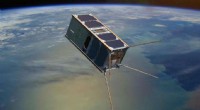
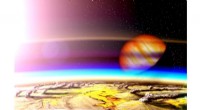
* Kepler Mission: This space telescope, launched in 2009, discovered thousands of exoplanets. The data collected by Kepler showed that planets are very common, not just rare exceptions.
* Microlensing: Another method of planet detection, this involves observing how the gravity of a star bends the light of a background star, revealing the presence of planets.
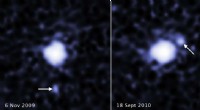
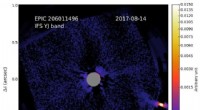
* Direct Imaging: While still challenging, astronomers are starting to directly image planets around other stars, further supporting the idea that planets are widespread.
However, it's important to note:
* Observational bias: Our current methods are more sensitive to certain types of planets (large planets close to their stars). We may be missing many smaller planets and those farther out.
* Statistical analysis: While the trend suggests almost all stars have planets, we can't conclusively say "all". There might be rare exceptions.
So, while we don't have a precise fraction, the current consensus is that planets are extremely common and likely exist around almost all stars.