The term "dwarf" in astronomy refers to the star's size, not its brightness. There are different types of dwarf stars, and their brightness varies greatly:
* Red dwarfs: These are the smallest and coolest type of star, and they are very dim. They emit only a small amount of light and heat, and they have very long lifespans.
* White dwarfs: These are the remnants of stars like our Sun, and they are very bright. They are extremely dense and hot, but they have no nuclear fusion happening, so they slowly cool down over time.
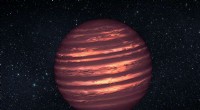
* Brown dwarfs: These are objects that are too small and cool to be considered stars, but they are dim. They emit light and heat due to the gravitational collapse of their core.
* Main sequence dwarfs: These are the most common type of star, including our Sun. They range in size and brightness, with larger and hotter stars being brighter.
Therefore, it's inaccurate to say that dwarf stars are always bright. Their brightness depends on their type, mass, and temperature.
Perhaps you're thinking of white dwarfs, which are indeed very bright, but their brightness comes from their high temperature, not their size.