The Sun is a star, and it's constantly undergoing nuclear fusion in its core. This process generates immense energy, which is released as light and heat. It's a continuous process, and the Sun doesn't go through distinct phases like the Moon.
However, the Sun does have a life cycle that can be divided into different stages:
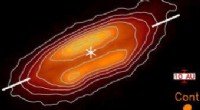
1. Protostar: This is the initial stage where a cloud of gas and dust collapses under its own gravity.
2. Main Sequence: This is the longest and most stable phase where the Sun fuses hydrogen into helium in its core. This is the stage we're currently in.
3. Red Giant: As the Sun runs out of hydrogen, it starts fusing helium, which causes it to expand and become cooler, making it appear red.
4. Planetary Nebula: The Sun sheds its outer layers, creating a beautiful glowing cloud of gas and dust.
5. White Dwarf: The core of the Sun remains as a dense, hot, and slowly cooling remnant.
So, while the Sun doesn't have phases in the same way as the Moon, it does have a life cycle with different stages.