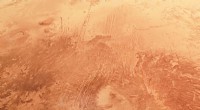
* Terrestrial Planets: These are rocky planets like Mercury, Venus, Earth, and Mars. They are relatively small and dense, and formed closer to the Sun where the solar nebula was hotter.
* Gas Giants: These are massive planets like Jupiter, Saturn, Uranus, and Neptune. They are composed primarily of hydrogen and helium, and formed further out in the cooler regions of the solar nebula.
The farther out a planet forms, the larger its orbital radius will be. Since gas giants formed farther out than terrestrial planets, they naturally have larger orbital radii.