What Makes It Modern:
* Scientific Method: Modern astronomy is firmly rooted in the scientific method, relying on observation, experimentation, and rigorous analysis to understand the universe.
* Technology: We've gone far beyond basic telescopes. Modern astronomy utilizes cutting-edge technology like:
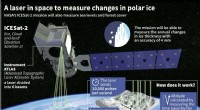
* Space Telescopes: Hubble, James Webb, Chandra, etc., allowing us to study objects beyond Earth's atmosphere.
* Ground-based Telescopes: Extremely large telescopes with adaptive optics to counteract atmospheric distortions.
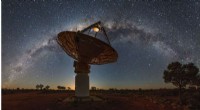
* Radio Telescopes: Used to study radio waves emitted by celestial objects.
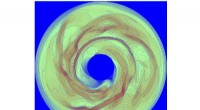
* Computational Power: Supercomputers are crucial for processing massive amounts of data and simulating complex astrophysical phenomena.
* Interdisciplinary: Modern astronomy collaborates heavily with other sciences, including:
* Physics: To understand the fundamental forces and laws governing the universe.
* Chemistry: To study the composition and evolution of stars and planets.
* Mathematics: For modelling and analyzing astronomical data.
* Focus on Understanding: The goal is not just to observe, but to gain a deeper understanding of:
* Origin and Evolution of the Universe: From the Big Bang to the formation of galaxies, stars, and planets.
* Properties of Celestial Objects: Stars, planets, galaxies, black holes, and more.
* Physical Processes: Gravitational waves, supernovae, star formation, etc.
* Life Beyond Earth: Searching for habitable planets and signs of extraterrestrial life.
Key Areas of Research:
* Cosmology: Study of the universe as a whole, its origin, structure, and evolution.
* Stellar Astrophysics: Study of stars, their life cycles, and how they produce energy.
* Galactic Astronomy: Study of galaxies, their formation, evolution, and interactions.
* Planetary Science: Study of planets, moons, asteroids, comets, and other objects within our solar system.
* Exoplanetary Science: Study of planets outside our solar system, including their formation, characteristics, and potential habitability.
In Essence:
Modern astronomy is a dynamic and exciting field that continuously pushes the boundaries of human knowledge about the universe. It combines the power of cutting-edge technology, rigorous scientific inquiry, and collaboration across various disciplines to unravel the mysteries of the cosmos.