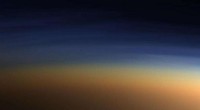
* Definition: The exosphere is the outermost layer of Earth's atmosphere, where the atmosphere gradually fades into space. It's characterized by extremely low density and very high altitudes.
* No Defined Boundary: The exosphere doesn't have a clear upper boundary. It's technically considered part of Earth's atmosphere, but it's so thin that it's essentially indistinguishable from space.
* Space Travel: Space travel typically refers to leaving Earth's atmosphere and traveling into the vastness of space beyond. This generally starts at the Kármán line, which is 100 kilometers (62 miles) above sea level and is considered the boundary between Earth's atmosphere and outer space.
So, while the exosphere is technically part of Earth's atmosphere, it's not a region where typical space travel occurs. Instead, it's a transition zone where the atmosphere gradually thins out into the near-vacuum of space.
Think of it this way:
* Spacecraft: Spacecraft designed for space travel need to escape Earth's gravitational pull and reach speeds that allow them to orbit or travel further into space.
* Exosphere: The exosphere is too thin to provide any significant lift or support for spacecraft.
In summary, the exosphere is more of a theoretical boundary than a practical region for space travel.