Here's why:
* Mass is key: The ultimate fate of a star is directly determined by its initial mass.
* Stellar evolution: Massive stars (generally those with at least 8-20 times the mass of our Sun) undergo a rapid and dramatic evolutionary journey.
* Supernova: After burning through their hydrogen fuel, these stars fuse heavier elements in their cores, leading to a core collapse and a powerful supernova explosion.
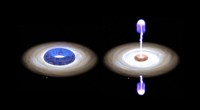
* Remnant: If the core of the exploded star is massive enough (above a certain limit called the Tolman-Oppenheimer-Volkoff limit), it collapses further into a singularity, forming a black hole.
In summary: Only the most massive stars, those exceeding a critical mass threshold, have the potential to become black holes.