Early Observations and Ideas:
* Ancient Greek Astronomers: Some Greek philosophers like Aristarchus of Samos proposed a heliocentric model as early as the 3rd century BC. However, this theory was largely disregarded due to the lack of supporting evidence and the prevailing geocentric model (Earth-centered) by Aristotle and Ptolemy.
* Nicholas Copernicus (1543): He revived the heliocentric theory with his book "De Revolutionibus Orbium Coelestium" (On the Revolutions of the Heavenly Spheres). While his model was more accurate than the geocentric model, it still lacked observational evidence to fully convince skeptics.
Evidence Building Up:
* Galileo Galilei (early 1600s): Galileo's observations with his telescope provided key evidence supporting the heliocentric model. He observed:
* Phases of Venus: Venus exhibited phases similar to the Moon, which was only possible if it orbited the Sun.
* Moons of Jupiter: The discovery of Jupiter's moons showed that not all celestial bodies revolve around the Earth.
* Sunspots: Observing sunspots moving across the Sun's surface suggested that the Sun was rotating.
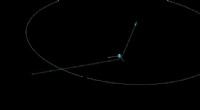
* Johannes Kepler (early 1600s): Kepler developed his laws of planetary motion, which explained the elliptical orbits of planets around the Sun. This provided a mathematical foundation for the heliocentric model.
Final Confirmation and Acceptance:
* Isaac Newton (late 1600s): Newton's theory of universal gravitation provided the physical explanation for why planets orbit the Sun. This further solidified the heliocentric model.
* Ongoing Observations and Measurements: Throughout the centuries, continued observations, measurements, and technological advancements have continually strengthened the heliocentric model.
It's important to note:
* The transition from the geocentric to the heliocentric model wasn't a sudden change but a gradual shift in understanding.
* The heliocentric model was not immediately accepted. It faced resistance from the Church and many scientists who held onto the geocentric view.
* The heliocentric model is not perfect, and there are still things we don't fully understand about the universe. But it has proven to be the most accurate and widely accepted model of the solar system.
In conclusion, proving the heliocentric model was a long journey of observation, calculation, and scientific debate, driven by the relentless pursuit of understanding the universe.