1. Planets and Stars:
* Gravity holds the planets in orbit around the Sun. Without gravity, the planets would fly off into space. We see planets because they reflect sunlight.
* Gravity causes stars to form. Massive clouds of gas and dust collapse under their own gravity, eventually igniting nuclear fusion and becoming stars. We see stars because they emit their own light.
2. The Moon:
* Gravity keeps the Moon in orbit around Earth. This is why we see the Moon in the sky.
3. Tides:
* The Moon's gravity pulls on the Earth's oceans, causing tides. We see the rise and fall of the ocean levels as a result of this gravitational influence.
4. Galaxies:
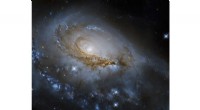
* Gravity holds galaxies together. Galaxies are vast collections of stars, gas, dust, and dark matter, all bound together by gravity. We see galaxies as swirling patterns of light because of the countless stars they contain.
5. Other Phenomena:
* Gravity affects the paths of light. This is known as gravitational lensing. It can cause distant objects to appear distorted or even multiple images of the same object.
6. The Atmosphere:
* Gravity holds the Earth's atmosphere in place. Without gravity, our atmosphere would escape into space. We see the colors of the sky (blue during the day, red at sunset) due to the interaction of light with the atmosphere.
In Summary:
Gravity is the fundamental force that shapes the cosmos and allows us to see the objects and phenomena in the sky. It holds planets in orbit, forms stars and galaxies, influences the tides, and even affects the paths of light. Without gravity, the universe would be a very different place, and we would see a very different sky.