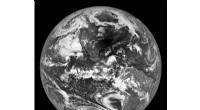
We explore planets using a wide range of methods, from the powerful telescopes on Earth to spacecraft sent directly to these celestial bodies. Here's a breakdown of the key techniques:
1. Telescopic Observations:
* Ground-based telescopes: Use powerful optics to gather light from distant planets, allowing us to:
* Measure light intensity and spectrum: Reveals composition, temperature, and atmospheric properties.
* Observe planetary transits: When a planet passes in front of its star, causing a slight dip in brightness, helping us determine size and orbital period.
* Detect Doppler shift: Observing slight shifts in the star's light due to the gravitational pull of an orbiting planet, revealing its mass.
* Space-based telescopes: Located above Earth's atmosphere, offering clearer and more detailed observations:
* Hubble Space Telescope: Provides high-resolution images and spectral data of planets, moons, and other celestial objects.
* James Webb Space Telescope: With infrared capabilities, it will be crucial for studying exoplanets and their atmospheres.
* Kepler Space Telescope: Revolutionized exoplanet discovery by detecting transits of planets around distant stars.
2. Spacecraft Missions:
* Flybys: Spacecraft briefly pass by a planet, capturing images and data from a close distance.
* Orbiters: Spacecraft circle a planet for extended periods, allowing detailed studies of its surface, atmosphere, and magnetic field.
* Landers: Spacecraft designed to touch down on a planet's surface, providing direct analysis of its composition and geology.
* Rovers: Mobile landers equipped with instruments for exploring a planet's surface, studying its composition, and searching for signs of life.
3. Data Analysis and Modeling:
* Spectroscopy: Analyzing the light from planets to determine their composition, temperature, and atmospheric properties.
* Photometry: Measuring the brightness of planets to study their size, orbital period, and possible atmospheric phenomena.
* Computer simulations: Creating virtual models to simulate planetary formation, evolution, and climate.
4. Other Techniques:
* Radio astronomy: Detecting radio waves emitted by planets, revealing their magnetic fields and atmospheric activity.
* Gravitational lensing: Using the bending of light around massive objects to detect and study exoplanets.
* Astrobiology: Investigating the possibility of life on other planets, focusing on identifying organic molecules and possible biosignatures.
Conclusion:
Through a combination of ground-based and space-based observations, sophisticated instruments, and powerful analytical tools, we are constantly learning more about the planets in our solar system and beyond. These investigations are crucial for understanding the origins and evolution of our own planet, the potential for life elsewhere, and the fundamental processes governing the universe.