Age and Expansion of the Universe:
* Hubble Constant: Hubble measured the rate at which the universe is expanding with greater precision than ever before. This helped refine our understanding of the age of the universe, placing it at approximately 13.8 billion years.
Galaxies and their Evolution:
* Deep Fields: Hubble's deep field images captured the faint light from distant galaxies, showing us the universe as it looked billions of years ago. This revealed the distribution and evolution of galaxies over cosmic time.
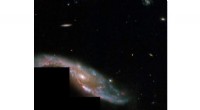
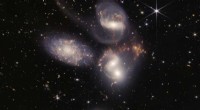
* Spiral Galaxy Structure: Hubble provided detailed images of spiral galaxies, revealing their intricate structure, including the distribution of gas, dust, and stars.
* Active Galactic Nuclei (AGN): Hubble's observations helped understand the nature of AGN, powerful sources of energy powered by supermassive black holes at the centers of galaxies.
Stars and Star Formation:
* Protoplanetary Disks: Hubble captured images of protoplanetary disks, the swirling clouds of gas and dust around young stars where planets are born.
* Stellar Life Cycles: Hubble provided detailed observations of stars throughout their life cycles, from birth to death, helping us understand stellar evolution.
* Supernovae: Hubble has observed supernovae, the explosive deaths of stars, providing insights into the processes that create heavy elements in the universe.
Planets and Exoplanets:
* Pluto's Atmosphere: Hubble revealed the surprising presence of an atmosphere around Pluto, revealing its complex nature.
* Exoplanet Atmospheres: Hubble has been used to study the atmospheres of planets orbiting other stars, providing clues about their composition and potential habitability.
Other Notable Discoveries:
* Dark Matter: Hubble's observations of galaxy rotation curves provided evidence for the existence of dark matter, a mysterious form of matter that does not interact with light.
* Cosmic Background Radiation: Hubble's observations of the cosmic microwave background radiation, the afterglow of the Big Bang, helped refine our understanding of the early universe.
Ongoing Research:
The Hubble Space Telescope continues to operate and make groundbreaking discoveries. Current research focuses on:
* Dark Energy: Hubble's observations of distant supernovae helped confirm the existence of dark energy, the mysterious force driving the accelerating expansion of the universe.
* Exoplanet Characterization: Hubble is used to study the atmospheres and properties of exoplanets, searching for signs of life.
* Black Hole Dynamics: Hubble is used to study the behavior of black holes and their influence on their surrounding environments.
These are just a few of the many major discoveries made by the Hubble Space Telescope. It has been a transformative instrument that has revolutionized our understanding of the universe and continues to inspire future exploration.