Ancient Methods:
* Constellations: Early civilizations observed the patterns of stars and grouped them into recognizable shapes called constellations. These were used for navigation, timekeeping, and storytelling.
* Naked-eye Observation: Astronomers meticulously recorded the positions and movements of celestial bodies by simply observing the night sky. This allowed them to track the paths of planets, identify comets, and create star catalogs.
Modern Methods:
* Telescopes: From ground-based observatories and space telescopes, astronomers capture images of celestial objects with high resolution and sensitivity. These images are analyzed to map the positions, distances, and properties of stars, galaxies, and other cosmic entities.
* Astrometry: This branch of astronomy focuses on precise measurements of the positions and motions of celestial bodies. Using sophisticated techniques like interferometry and space-based observatories, astronomers determine the distances and proper motions of stars and other objects.
* Photometry: This technique measures the brightness of celestial objects, providing information about their luminosity, composition, and evolution. Photometric surveys map the sky, identifying stars, galaxies, and other objects based on their brightness.
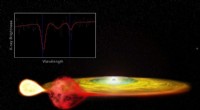
* Spectroscopy: By analyzing the light from celestial objects, astronomers can determine their chemical composition, temperature, and velocity. This information helps to map the distribution of elements and understand the dynamics of the universe.
* Digital Sky Surveys: Modern digital surveys like the Sloan Digital Sky Survey (SDSS) and the Gaia mission use specialized telescopes and cameras to capture high-resolution images of the entire sky. These surveys create vast digital catalogs containing information about billions of stars and galaxies.
Coordinate Systems:
To accurately map the night sky, astronomers use celestial coordinate systems similar to the latitude and longitude on Earth. Two common systems are:
* Equatorial Coordinate System: This system uses declination (similar to latitude) and right ascension (similar to longitude) to define a star's position relative to the celestial equator.
* Horizon Coordinate System: This system defines a star's position relative to the observer's horizon, using altitude (height above the horizon) and azimuth (compass direction).
Maps and Databases:
These methods contribute to the creation of various night sky maps and databases, including:
* Star Charts: These maps show the positions of stars and constellations, helping astronomers identify and navigate the night sky.
* Celestial Globes: These 3D representations of the night sky depict the positions of stars and constellations.
* Online Databases: Websites and software like Stellarium and Google Sky provide interactive visualizations of the night sky, allowing users to explore different locations and times.
The mapping of the night sky is a continuous process, with ongoing research and technological advancements revealing new discoveries and providing an ever-increasing understanding of the universe.