Asteroids
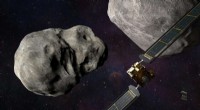
* Size: Larger, ranging from a few meters to hundreds of kilometers in diameter.
* Location: Primarily found in the asteroid belt between Mars and Jupiter, but some can have orbits that bring them closer to Earth.
* Composition: Mostly rock and metal, with some icy asteroids.
* Visibility: Not visible to the naked eye unless they are unusually large or close to Earth.
* Impact: Can cause significant damage if they hit Earth, potentially causing mass extinction events.
Meteors
* Size: Much smaller, typically the size of a grain of sand to a pebble.
* Location: Found in space, but enter Earth's atmosphere and burn up.
* Composition: Mostly rock and metal, but can also include dust and ice.
* Visibility: Visible as bright streaks of light (shooting stars) as they burn up in the atmosphere.
* Impact: Most burn up completely, but larger ones can reach the Earth's surface as meteorites.
Here's a simple analogy:
* Think of asteroids as the rocks in space.
* Meteors are like tiny pebbles that are traveling through space and enter the Earth's atmosphere.
Key Takeaway:
The main difference is size and what you see. Asteroids are the large objects in space, while meteors are the streaks of light we see when small space debris burns up in our atmosphere.