The far side of the moon is actually quite mysterious because:
* No direct observation from Earth: It's impossible to see the far side from Earth, making it challenging to study with ground-based telescopes.
* Different terrain: The far side has a much rougher and more heavily cratered surface than the near side. This is likely due to its exposure to more asteroids and meteoroids over time.
* Unique geological features: The far side has several unique features, including a large impact basin called the South Pole-Aitken Basin, and a vast, volcanic plain called the Orientale Basin.
* Limited exploration: While spacecraft like Lunar Reconnaissance Orbiter have mapped the surface of the far side, we have yet to land a mission there.
However, the far side of the moon isn't actually "dark." It receives just as much sunlight as the near side, just at different times.
So, what are some of the mysteries of the far side?
* Origin of the different terrain: Why is the far side so much rougher than the near side?
* Formation of the South Pole-Aitken Basin: How did this giant impact basin form, and what secrets does it hold about the early solar system?
* Presence of water ice: Some scientists believe that there may be deposits of water ice in permanently shadowed craters on the far side.
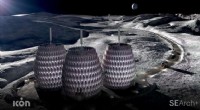
* Potential for future exploration: Could the far side be a good location for a future lunar base?
The far side of the moon still holds many mysteries, but with ongoing missions and advancements in technology, we are slowly unraveling its secrets.