1. Peering Through Dust and Gas:
* Infrared radiation can penetrate dust clouds that block visible light. This allows astronomers to see objects obscured by interstellar dust, like:
* Young stars forming: These are often hidden within dense gas and dust clouds.
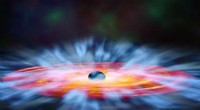
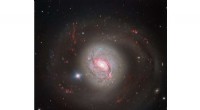
* The centers of galaxies: Where massive black holes reside and are surrounded by dust.
* Planets forming around other stars: The process of planet formation is often shrouded in dust.
2. Studying Cool Objects:
* Objects that are relatively cool, like:
* Brown dwarfs: These are failed stars that don't have enough mass to ignite nuclear fusion.
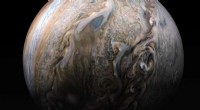
* Cold planets: Exoplanets that are far from their host star and therefore have low surface temperatures.
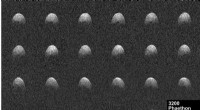
* Comets and asteroids: These icy bodies emit infrared radiation as they absorb sunlight.
3. Understanding the Composition of Objects:
* Different molecules absorb and emit infrared radiation at specific wavelengths. By analyzing the infrared spectrum of an object, astronomers can identify:
* The chemical composition of planets, stars, and nebulae.
* The presence of water, methane, carbon dioxide, and other important molecules.
4. Mapping the Universe:
* Infrared astronomy is crucial for:
* Mapping the distribution of galaxies in the universe.
* Studying the evolution of galaxies over time.
* Identifying distant galaxies that are too faint to be seen in visible light.
5. Other Benefits:
* Observing celestial objects during the day: Since infrared radiation is less affected by Earth's atmosphere than visible light, astronomers can make observations during the day.
* Studying the Earth's atmosphere and climate: Infrared radiation can be used to measure Earth's temperature, study weather patterns, and monitor greenhouse gas concentrations.
Instruments for Infrared Astronomy:
* Space telescopes: Like the Spitzer Space Telescope, the James Webb Space Telescope (JWST), and the Herschel Space Observatory.
* Ground-based telescopes: These are often equipped with special instruments called "infrared cameras" or "spectrographs."
Overall, infrared astronomy offers astronomers a powerful tool for understanding the universe in ways that are impossible with visible light alone.