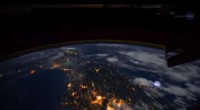
Factors affecting atmospheric thickness:
* Formation: The outer planets formed in the colder, outer regions of the solar system where lighter elements like hydrogen and helium were abundant. These elements easily formed gaseous atmospheres, contributing to their immense size.
* Gravity: The larger mass of outer planets creates a stronger gravitational pull, which helps hold onto their massive atmospheres.
* Distance from the Sun: While distance plays a role in temperature, it's not the sole determining factor for atmospheric thickness. The colder temperatures in the outer solar system do contribute to the retention of volatile gases, but gravity is the primary force holding them in place.
Inner Planets:
* Formation: Inner planets formed closer to the sun, where the heat drove away lighter elements like hydrogen and helium. They primarily accumulated heavier elements, resulting in rocky compositions.
* Weak gravity: Compared to outer planets, inner planets have lower gravity, making it difficult to retain large atmospheres.
* Solar wind: The sun's solar wind also strips away any loose atmosphere from inner planets.
Exceptions:
* Venus: Despite being an inner planet, Venus has a thick atmosphere primarily composed of carbon dioxide. This is due to a runaway greenhouse effect, where the planet's surface temperature has risen drastically, trapping atmospheric gases.
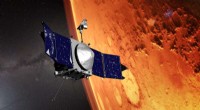
* Mars: While Mars has a very thin atmosphere, it still possesses one, albeit much thinner than Earth's. Its thinness is attributed to the loss of its magnetic field, which made it vulnerable to solar wind erosion.
Conclusion:
While the outer planets have massive atmospheres due to their formation, composition, and gravity, it's not simply because of their distance from the sun. Inner planets have varying atmospheric thicknesses depending on their composition, geological history, and proximity to the sun's influence.