Here's how it works:
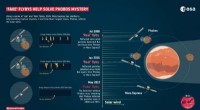
1. Observation: We observe the position of a star from Earth at two different points in time, typically six months apart. This difference in observation points is due to Earth's orbit around the Sun.
2. Angle Measurement: The apparent shift in the star's position against the background of more distant stars is measured. This shift, known as the parallax angle, is extremely small.
3. Distance Calculation: Using trigonometry, we can calculate the distance to the star based on the parallax angle and the known distance between Earth's two observation points (the diameter of Earth's orbit).
The smaller the parallax angle, the farther away the star is.
Note: Parallax is only effective for relatively nearby stars. For very distant stars, the parallax angle becomes too small to measure accurately. Other methods, like standard candles, are then used to determine distances.