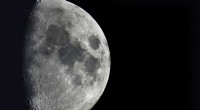
* Orbit: The moon orbits the Earth, taking about 27.3 days to complete one full revolution.
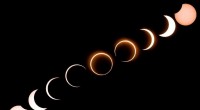
* Phases: The phases of the moon are determined by the position of the sun, Earth, and moon. As the moon orbits the Earth, the amount of the sunlit portion we see changes.
Here's how the full moon fits in:
* Full Moon: The full moon occurs when the moon is on the opposite side of the Earth from the sun. This means the entire sunlit hemisphere of the moon faces the Earth, making it appear fully illuminated.
Therefore, the full moon is a specific phase in the moon's orbital journey around the Earth.