Planets with a Strong Magnetic Field:
* Earth: Earth's magnetic field is generated by the movement of molten iron in its core. It acts as a shield, protecting us from harmful solar radiation.
* Jupiter: Jupiter's magnetic field is the strongest in our solar system, about 20,000 times stronger than Earth's. It's generated by the rapid rotation of its metallic hydrogen core.
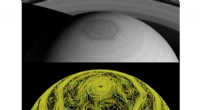
* Saturn: Saturn's magnetic field is also very strong, but less powerful than Jupiter's. It's generated by the movement of metallic hydrogen in its core.
* Uranus: Uranus has a unique magnetic field that is tilted at a significant angle and offset from the planet's center. Its origin is still debated, but it's likely related to the movement of conductive materials within its interior.
* Neptune: Neptune also has a strong magnetic field that is tilted and offset. Its origin is similar to Uranus, likely due to the movement of conductive materials in its core.
Planets with a Weak or No Magnetic Field:
* Mercury: Mercury has a very weak magnetic field, about 1% of Earth's. It's thought to be generated by the movement of its molten core.
* Venus: Venus has a very weak magnetic field, essentially negligible. Its slow rotation and lack of a metallic core are likely reasons.
* Mars: Mars has a weak, patchy magnetic field, about 1/1000th the strength of Earth's. It's believed that Mars once had a stronger magnetic field, but it has since weakened significantly.
Important Note: Our understanding of planetary magnetic fields is constantly evolving as we gather more data.