The Star:
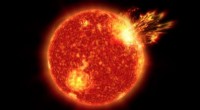
* Sun: The Sun is a massive, hot ball of plasma at the center of our solar system. It provides light and heat, making life on Earth possible.
The Planets:
* Inner Planets (Terrestrial Planets):
* Mercury: The smallest and closest planet to the Sun, with a rocky surface and extreme temperature swings.
* Venus: The hottest planet due to a thick atmosphere, often called Earth's "twin" due to its similar size.
* Earth: Our home planet, with liquid water, a diverse atmosphere, and life.
* Mars: The "Red Planet," known for its rusty color and potential past habitability.
* Outer Planets (Gas Giants):
* Jupiter: The largest planet, known for its Great Red Spot and numerous moons.
* Saturn: Famous for its stunning ring system, made up of ice and rock particles.
* Uranus: An ice giant with a tilted axis, making it appear to rotate on its side.
* Neptune: The furthest planet from the Sun, known for its strong winds and blue appearance.
Dwarf Planets:
* Pluto: Once considered the ninth planet, Pluto is now classified as a dwarf planet. It's located in the Kuiper Belt.
* Eris: Another dwarf planet in the Kuiper Belt, even larger than Pluto.
* Ceres: The largest object in the asteroid belt between Mars and Jupiter.
* Makemake and Haumea: Other dwarf planets in the Kuiper Belt.
Other Objects:
* Asteroids: Rocky bodies mostly found in the asteroid belt between Mars and Jupiter.
* Comets: Icy bodies that release gas and dust when they get close to the Sun.
* Meteoroids: Small pieces of rock and debris in space.
* Moons: Natural satellites that orbit planets.
* Space Dust: Tiny particles of rock and ice that float in space.
Important Regions:
* Kuiper Belt: A disk-shaped region beyond Neptune filled with icy objects and dwarf planets.
* Oort Cloud: A theoretical spherical cloud of icy objects surrounding the solar system, thought to be the source of long-period comets.
This list highlights the major components of our solar system. It's a dynamic and fascinating place where we continue to make new discoveries!