Here's why:
* Massive Stars: Stars with masses greater than 8-10 solar masses are considered massive stars.
* Nuclear Fusion: These stars fuse heavier elements in their cores, progressing through a series of stages: hydrogen to helium, helium to carbon, carbon to oxygen, and so on.
* Iron Core: Eventually, the core becomes mostly iron. Iron fusion doesn't release energy, so the core collapses rapidly under its own gravity.
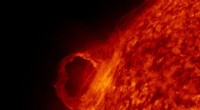
* Supernova: The collapse triggers a shock wave that explodes the star in a supernova explosion, leaving behind either a neutron star or a black hole.
Important Notes:
* Type II Supernova: This type of supernova is specifically caused by the collapse of a massive star's core.
* Neutron Star or Black Hole: The remnant of the supernova depends on the star's initial mass. A 25 solar mass star will likely leave behind a black hole.
In short, a 25 solar mass star will burn through its fuel quickly, ending in a dramatic, explosive demise as a Type II supernova.