1. Observation and Evidence:
* Stars: We see stars in the night sky, which are massive balls of hot gas that emit light. This light travels through the vast emptiness of space to reach our eyes.
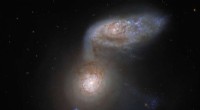
* Galaxies: We can observe galaxies millions of light-years away, demonstrating that light travels through the immense distances between them.
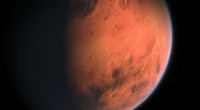
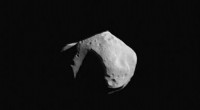
* Solar System: We see the Sun, planets, and other objects in our solar system because light reflects off them and travels to our eyes.
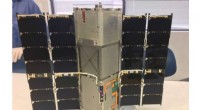
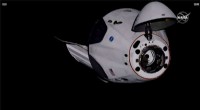
* Spacecraft: Satellites and probes have been sent into space and have sent back images and data, which are transmitted via light signals.
2. Scientific Understanding:
* Electromagnetic Spectrum: Light is a form of electromagnetic radiation, which can travel through a vacuum like outer space.
* Speed of Light: The speed of light in a vacuum is a fundamental constant in physics, and it is known to be extremely fast. This speed is the same regardless of the distance or the medium through which it travels.
* Experimentation: Scientists have conducted experiments in vacuum chambers that confirm light can travel through empty space.
3. Theoretical Considerations:
* Maxwell's Equations: These equations describe the behavior of electromagnetic radiation, including light. They predict that light should be able to travel through a vacuum.
* Quantum Mechanics: This theory describes the behavior of light as both waves and particles, and it also predicts that light can travel through a vacuum.
In summary, the evidence from observation, scientific understanding, and theoretical considerations all strongly suggest that light can travel through outer space.