1. The overwhelming brightness of stars:
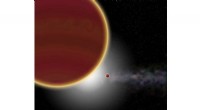
- Stars are incredibly bright compared to their planets, making it extremely difficult to detect the faint light reflected from an exoplanet. This is like trying to see a firefly next to a lighthouse.
- The planet's signal is often drowned out by the star's light, making it difficult to separate and study.
2. Small angular separation:
- Exoplanets orbit very close to their stars, resulting in a tiny angular separation between them.
- This makes it challenging to distinguish the planet's light from the star's, even with powerful telescopes.
3. Limited resolution:
- Telescopes have limitations in their ability to distinguish between two objects that are close together (angular resolution).
- This makes it difficult to see the planet separately from its star.
4. Atmospheric effects:
- Earth's atmosphere distorts starlight, further blurring the images of planets.
- This can make it difficult to detect faint planetary signals.
5. Transit method limitations:
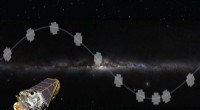
- The transit method, which detects planets by observing the slight dimming of starlight as they pass in front of their star, only works for planets that are edge-on to our line of sight.
- This means that many planets may be missed by this technique.
6. Direct imaging challenges:
- Direct imaging involves taking a picture of the planet directly, but this is incredibly difficult due to the overwhelming brightness of the star.
- It requires specialized telescopes with advanced techniques to block out the starlight and reveal the planet.
7. Unpredictable planetary systems:
- Exoplanetary systems can be very diverse, with planets in various sizes, orbits, and compositions.
- This makes it challenging to predict where to look for them and how to interpret the data.
8. Technological limitations:
- While telescopes are constantly being improved, there are still limitations in sensitivity, resolution, and adaptive optics capabilities.
- These limitations make it difficult to detect and study faint and distant exoplanets.
Despite these challenges, astronomers have made remarkable progress in detecting and characterizing exoplanets.
- New techniques like radial velocity measurements and microlensing have been developed.
- Space telescopes like Kepler and TESS have revolutionized exoplanet research.
- Continued technological advancements and new observational methods are continuously improving our ability to explore and understand the universe beyond our solar system.