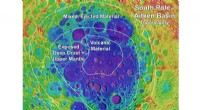
Here's a breakdown of what happens during an impact:
* Impact: The object slams into the Moon's surface at high speed.
* Explosion: The impact generates tremendous heat and energy, creating a massive explosion.
* Crater Formation: The explosion blasts out a bowl-shaped crater.
* Ejecta: Material from the impact site is thrown outwards, creating a ring of debris around the crater.
* Melt and Vaporization: The intense heat melts and vaporizes rock, leaving behind a glassy layer called "impact melt" at the crater's base.
The size and shape of the crater depend on several factors, including:
* Size and Speed of the Impactor: Larger and faster objects create larger craters.
* Angle of Impact: A steep angle of impact creates a deeper crater than a shallow angle.
* Composition of the Moon's Surface: The composition of the Moon's surface at the impact site also affects the crater's appearance.
Studying these craters gives us insights into the history of the Moon and the solar system. It also helps us understand the processes that shaped the Earth's surface in the early days.