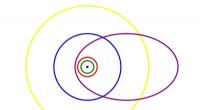
* They orbit the Sun: All of these objects are gravitationally bound to the Sun and follow a path around it. This is the defining characteristic of objects within a solar system.
* They formed within the same protoplanetary disk: These objects formed from the same cloud of gas and dust that gave rise to the Sun and planets billions of years ago. They are remnants of this early material.
* They interact with other objects in the solar system: These objects can collide with planets, moons, and other smaller objects in the solar system. They also influence each other's orbits through gravitational interactions.
Here's a breakdown of why each object is considered part of the solar system:
* Asteroids: These are rocky bodies that mostly reside in the asteroid belt between Mars and Jupiter.
* Meteoroids: These are smaller fragments of asteroids, comets, or other celestial bodies.
* Comets: These are icy bodies that release gas and dust when they get close to the Sun, forming a tail.
* Dust: This is fine particulate matter, often the result of collisions or outgassing from comets and asteroids.
While they may be small or seemingly insignificant, these objects contribute to the overall structure and history of our solar system. They provide clues about the early solar system and its evolution.