Here's a breakdown:
Bodies that emit light (meaning visible light):
* Stars: Stars are giant balls of hot gas undergoing nuclear fusion, releasing vast amounts of energy, including light.
* Planets: Planets themselves don't emit much light, but they reflect sunlight, making them visible to us.
* Moons: Like planets, moons reflect light from their parent stars.
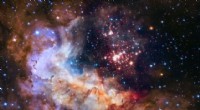
* Some Nebulae: These are clouds of gas and dust that can be illuminated by nearby stars, causing them to glow.
* Some Galaxies: Galaxies are collections of stars, so they emit light from their constituent stars.
* Supernovae: The explosions of dying stars release intense bursts of light.
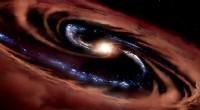
* Active Galactic Nuclei (AGN): The supermassive black holes at the centers of some galaxies can release enormous amounts of energy, including light, as matter falls into them.
Bodies that emit other forms of radiation, not visible light:
* Black Holes: While black holes don't emit light, they emit powerful jets of high-energy particles that can create radiation visible to us.
* Neutron Stars: These extremely dense stars emit X-rays and other types of radiation.
* Pulsars: Rapidly spinning neutron stars that emit pulses of radiation.
* Quasars: Powerful sources of radiation powered by supermassive black holes.
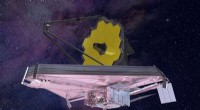
Key takeaway: All objects in space emit some form of radiation. While some objects emit light we can see, others emit radiation in other wavelengths (like infrared, X-rays, etc.), requiring specialized telescopes to detect them.