1. The Beginning: The Solar Nebula
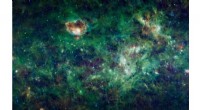
* The solar system started as a vast cloud of gas and dust called the solar nebula.
* This cloud was mostly hydrogen and helium, but also contained heavier elements like carbon, nitrogen, and oxygen.
* Gravity caused the nebula to collapse inward, spinning faster as it contracted.
2. The Formation of the Sun
* At the center of the collapsing nebula, the temperature and pressure became so intense that nuclear fusion ignited, forming the Sun.
3. The Formation of Planets
* The remaining material in the nebula began to clump together, forming smaller bodies called planetesimals.
* These planetesimals collided and merged, eventually growing into the planets we know today.
4. The Leftovers: Asteroids
* Not all of the material in the nebula was incorporated into planets. Some planetesimals remained scattered throughout the solar system, especially in the region between Mars and Jupiter.
* These leftover planetesimals are the asteroids.
5. Variations in Asteroids
* Asteroids are diverse in size, composition, and shape.
* Some are rocky, while others are metallic or icy.
* Their shapes range from nearly spherical to highly irregular.
* This diversity reflects the different conditions and environments where they formed.
6. Asteroid Belts
* The largest concentration of asteroids is found in the asteroid belt between Mars and Jupiter.
* The gravitational pull of Jupiter prevented a planet from forming in this region, leaving behind a vast population of asteroids.
In summary: Asteroids are basically leftover building blocks from the formation of the solar system that never quite made it into a planet. Their diverse characteristics provide clues to the conditions of the early solar system and how planets formed.