Planets with Magnetic Fields:
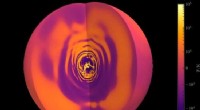
* Earth: Earth has a strong magnetic field generated by the movement of molten iron in its core. This field acts as a shield, protecting us from harmful solar radiation.
* Mercury: Mercury has a weak magnetic field, about 1% of Earth's.
* Jupiter: Jupiter has the strongest magnetic field in the solar system, about 20,000 times stronger than Earth's. Its immense size and rapid rotation contribute to this powerful field.
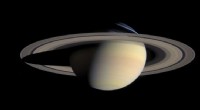
* Saturn: Saturn also has a strong magnetic field, about one-seventh the strength of Jupiter's.
* Uranus: Uranus has a unique magnetic field that is tilted at a significant angle and is not aligned with its axis of rotation.
* Neptune: Neptune has a magnetic field that is also tilted and shifted off-center from the planet's core.
Planets with Weak or No Magnetic Fields:
* Venus: Venus has a very weak magnetic field, which is thought to be induced by the interaction of its atmosphere with the solar wind.
* Mars: Mars has a very weak magnetic field, with only localized patches of magnetism. This suggests that Mars's core has cooled and solidified.
Why are magnetic fields important?
* Protection from solar radiation: Magnetic fields act as shields against harmful solar radiation, which can damage life.
* Auroras: The interaction of magnetic fields with charged particles from the sun can create beautiful auroras.
* Navigation: Magnetic fields can help animals navigate.
* Planet formation: Magnetic fields can influence the formation and evolution of planets.
Other celestial bodies:
* Moons: Some moons, such as Ganymede (Jupiter's moon), also have their own magnetic fields.
* Stars: All stars have magnetic fields, but the strength varies.
It's worth noting that the presence and strength of magnetic fields on planets can be influenced by various factors, including their core composition, rotation speed, and internal structure.