Electromagnetic Radiation:
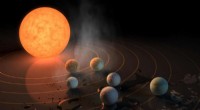
* Visible Light: This is the portion of the electromagnetic spectrum that our eyes can perceive, giving stars their characteristic colors. Different temperatures lead to different colors: hotter stars appear bluish-white, while cooler stars appear red.
* Infrared Radiation: Stars emit significant amounts of infrared radiation, which is heat energy. This radiation can be detected by specialized telescopes.
* Ultraviolet Radiation: Hotter stars emit significant amounts of UV radiation, which is more energetic than visible light. This can be harmful to life on Earth.
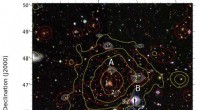
* X-rays: Very hot stars, particularly young, massive stars and neutron stars, emit X-rays, which are even more energetic than UV radiation.
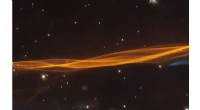
* Gamma Rays: The most energetic form of radiation, gamma rays are emitted by the most extreme celestial objects like black holes and supernovae.
Other Radiation:
* Neutrinos: These are tiny, nearly massless particles that are produced in the nuclear fusion reactions that power stars. They interact very weakly with matter, making them extremely difficult to detect.
* Cosmic Rays: These are high-energy particles, primarily protons and atomic nuclei, that are accelerated to near the speed of light by astrophysical processes like supernovae and active galactic nuclei.
Note: The specific types and amounts of radiation emitted by a star depend on factors like its size, temperature, age, and chemical composition.
Significance of Stellar Radiation:
* Understanding stellar evolution: Studying the radiation emitted by stars allows astronomers to infer their properties, such as temperature, composition, and age.
* Probing the Universe: Stellar radiation is used to study distant galaxies, nebulae, and other celestial objects.
* Impacts on Earth: Solar radiation provides light and warmth to Earth, but it can also have harmful effects on life.
Hope this helps! Let me know if you have any other questions.