Visible Light (Optical)
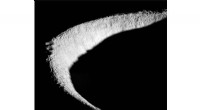
* Telescopes: Optical telescopes allow us to see stars, galaxies, and other celestial objects in visible light. This helps us understand their composition, temperature, and motion.
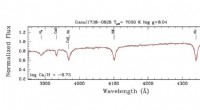
* Spectroscopy: Analyzing the spectrum of visible light from stars tells us about their chemical composition and temperature.
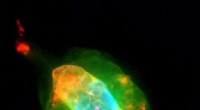
* Imaging: Visible light images provide stunning views of celestial objects, helping us understand their structures and evolution.
Infrared
* Detecting cool objects: Infrared radiation is emitted by cooler objects, like dust clouds, planets, and protostars. This helps us study star formation and the composition of planets.
* Mapping dust and gas: Infrared radiation penetrates through dust clouds, allowing us to see what's happening inside. This is crucial for studying star formation and the evolution of galaxies.
* Studying exoplanets: Infrared light can be used to detect and study exoplanets, especially those orbiting cooler stars.
Ultraviolet
* Studying hot objects: Ultraviolet radiation is emitted by hot objects, like stars and quasars. This helps us understand their temperatures, compositions, and evolutionary stages.
* Analyzing atmospheres: Ultraviolet radiation interacts with atmospheres, providing information about their composition and temperature.
* Detecting supernovae: Ultraviolet emissions are strong indicators of supernova explosions, allowing us to study these powerful events.
X-ray
* Observing high-energy phenomena: X-rays are produced in high-energy environments, like black holes, neutron stars, and supernova remnants. This helps us understand the extreme physics occurring in these objects.
* Mapping the hot gas in galaxies: X-ray emissions from hot gas can help us study the evolution of galaxies and the distribution of dark matter.
* Studying the Sun: X-rays from the Sun provide information about solar flares and coronal mass ejections, which can impact Earth.
Gamma-ray
* Exploring the most energetic processes: Gamma-rays are the highest energy form of light, produced by the most energetic processes in the universe, such as black hole jets and supernova explosions.
* Detecting pulsars: Gamma-ray telescopes can detect pulsars, rapidly rotating neutron stars that emit powerful beams of radiation.
* Studying the early universe: Gamma-rays from distant objects can help us study the universe in its early stages.
Other Uses
* Radar: Radar signals are used to map the surface of planets and moons, as well as to study the atmosphere of Venus.
* Radio waves: Radio waves are used to study pulsars, active galactic nuclei, and the cosmic microwave background radiation.
The electromagnetic spectrum is a powerful tool for exploring the universe and answering fundamental questions about its origins and evolution. Each part of the spectrum provides unique information, allowing us to understand the vastness and complexity of space.