Here's why:
* Magnetic fields are generated by the movement of electrically conductive material. This usually happens within a planet's core, where molten metal (like iron) flows.
* Planets vary in their composition and internal structure. Some planets have large, molten cores, while others have smaller, solid cores or are primarily made of gas.
* Rotation speed also plays a role. A faster rotation can contribute to the generation of a stronger magnetic field.
Here's a breakdown:
Planets with strong magnetic fields:
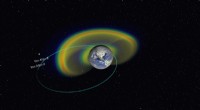
* Earth: Our planet's magnetic field is a key factor in protecting life from harmful solar radiation.
* Jupiter: It has the strongest magnetic field in the solar system, much stronger than Earth's.
* Saturn: Also has a strong magnetic field.
* Mercury: Surprisingly, this small, rocky planet has a weak but noticeable magnetic field.
* Uranus and Neptune: Both have tilted magnetic fields, meaning their magnetic poles are significantly offset from their rotational poles.
Planets with weak or no magnetic fields:
* Venus: Has a very weak magnetic field.
* Mars: Possesses a very weak magnetic field, possibly a remnant of a stronger field in the past.
* The Moon: Has no global magnetic field.
In summary, a planet's magnetic field depends on its internal structure, composition, and rotation. Some planets have strong magnetic fields, while others have weak or no magnetic fields at all.