Intrinsic Properties:
* Mass: This is the most fundamental property. More massive stars are hotter, brighter, bluer, and have shorter lifespans. They also burn through their fuel faster, leading to a more rapid evolution.
* Age: Stars evolve over time. Young stars are typically hotter and bluer, while older stars become cooler and redder.
* Composition: Stars are primarily made of hydrogen and helium, but trace amounts of other elements can influence their color and brightness.
* Rotation: A star's rotation rate influences its shape, magnetic fields, and even its lifetime. Faster rotation can lead to a more distorted shape and stronger magnetic fields.
Extrinsic Factors:
* Distance: The apparent brightness of a star is greatly affected by its distance from Earth. Two stars with identical intrinsic brightness will appear differently if they are at different distances.
* Interstellar Dust: Dust in space can absorb and scatter starlight, making stars appear dimmer and redder.
* Binaries and Multiple Star Systems: Stars often exist in systems with other stars, influencing their evolution and appearance. For example, a star can appear brighter due to the presence of a companion star.
Observational Techniques:
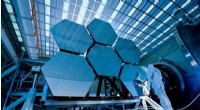
* Telescopes: Different types of telescopes and instruments are used to study stars, from optical telescopes that observe visible light to radio telescopes that detect radio waves. Each technique reveals different aspects of a star's characteristics.
* Spectroscopy: Analyzing the light emitted by a star (its spectrum) can reveal its temperature, composition, and radial velocity (movement towards or away from us).
The interplay of these factors creates the diverse range of stars we observe. From the cool red dwarfs to the massive blue supergiants, each star tells a story of its own formation, evolution, and ultimate fate.