* Planets: These are large celestial bodies that orbit a star and have cleared their orbital path of other objects.
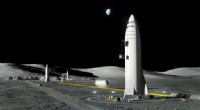
* Moons: Natural satellites that orbit planets.
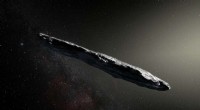
* Asteroids: Rocky bodies that orbit a star, primarily found in the asteroid belt between Mars and Jupiter.
* Comets: Icy bodies that orbit a star in highly elliptical paths.
* Dust and gas: Material that is leftover from the formation of the system.
Our own Solar System is an example of a planetary system. It consists of the Sun, eight planets (Mercury, Venus, Earth, Mars, Jupiter, Saturn, Uranus, Neptune), numerous moons, asteroids, comets, and dust.
Here's a key point: The definition of a planetary system focuses on objects orbiting a star, not just planets. It's a broader term encompassing all the components that make up a star's gravitational domain.