1. Nebulae: These are vast clouds of gas and dust, primarily hydrogen and helium, spread across space.
2. Gravity: Over time, pockets of denser gas within the nebula start to collapse under their own gravity.
3. Accretion: As these pockets condense, they attract more and more gas and dust, growing in size and density.
4. Protostar: Eventually, the core of the collapsing cloud becomes incredibly hot and dense, forming a protostar.
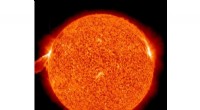
5. Nuclear Fusion: The immense pressure and heat at the core of the protostar ignite nuclear fusion, where hydrogen atoms fuse to form helium. This process releases enormous energy, which provides the outward pressure needed to balance the inward pull of gravity.
6. Star Birth: Once nuclear fusion becomes sustained, the protostar has officially become a star.
So, the joining of nebulae particles, driven by gravity, ultimately leads to the birth of stars.