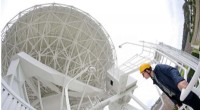
* Large antennas: Radio telescopes have massive dish-shaped antennas that act like giant mirrors, focusing the incoming radio waves onto a receiver.
* Sensitive receivers: The receiver converts the radio waves into electrical signals that can be processed and analyzed.
* Data processing: Computers are used to analyze the signals and create images and maps of the radio sources.
Here are some key features of radio telescopes:
* Large size: The size of the antenna determines the telescope's sensitivity and resolution. Larger antennas can detect fainter signals and resolve smaller details.
* Location: Radio telescopes are often located in remote areas with minimal radio interference, such as deserts or mountains.
* Interferometry: Multiple radio telescopes can be linked together to create a much larger virtual telescope, improving sensitivity and resolution even further.
Radio telescopes have revolutionized our understanding of the universe, allowing us to study:
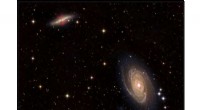
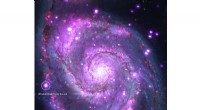
* Stars and galaxies: Radio waves provide information about the temperature, composition, and magnetic fields of these objects.
* Black holes: Radio telescopes can observe the jets of particles ejected from black holes.
* Cosmic Microwave Background Radiation: This radiation, a remnant of the Big Bang, can be studied with radio telescopes.
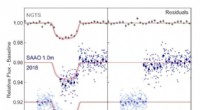
* Planets and exoplanets: Radio waves can be used to study the atmospheres of planets and search for new worlds.
Overall, radio telescopes are essential tools for astronomers, allowing them to explore the universe in a way that is impossible with optical telescopes.