* Distance: 100,000 light-years is an incredibly vast distance. Even the most powerful telescopes struggle to see individual stars at such distances.
* Brightness: The apparent brightness of a star decreases with distance. A star that's 100,000 light-years away would be extremely faint, making it impossible to see without specialized equipment.
* Galactic Disk: Most stars visible to the naked eye are within our own Milky Way galaxy. Stars 100,000 light-years away would be outside the main disk of our galaxy and likely located in a nearby galaxy.
What can be seen at that distance:
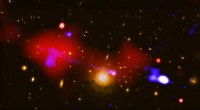
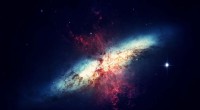
* Galaxies: While individual stars might be impossible to see, we can observe entire galaxies at distances of 100,000 light-years or more. These galaxies can be detected by their collective light.
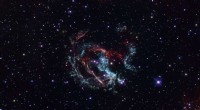
* Nebulae: Certain types of nebulae (clouds of gas and dust) can be visible even at vast distances.
Important Note: There might be extremely luminous objects like supernovae or quasars that could be visible at that distance, but these are rare events.