However, we have several ways to figure out what they're made of:
1. Observing light:
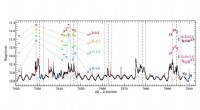
* Spectroscopy: We analyze the light coming from a planet (or reflected light from a star). Different elements absorb and emit light at specific wavelengths, creating unique "fingerprints" in the spectrum. By studying these fingerprints, we can identify the elements present.
* Color: Even without detailed spectroscopy, the color of a planet can give clues. For example, a reddish planet likely has lots of iron oxide (rust).
2. Studying meteorites:
* Meteorites: These space rocks that fall to Earth often come from asteroids or other planets. Analyzing their composition can tell us about the elements present in their parent body.
3. Sending spacecraft:
* Spacecraft Missions: Missions like the Mars rovers analyze soil and rock samples directly. This provides the most detailed and accurate data on the elemental composition of a planet.
What we know about elements on different planets:
* Mercury: Mostly iron and nickel with a rocky outer layer.
* Venus: Mostly iron, silicon, oxygen, and sulfur.
* Earth: Dominated by iron, oxygen, silicon, magnesium, sulfur, nickel, calcium, and aluminum.
* Mars: Rich in iron oxide (rust), giving it its reddish color. Also contains silicon, oxygen, and other elements.
* Jupiter, Saturn, Uranus, Neptune: Primarily hydrogen and helium with traces of heavier elements in their cores.
Important note: We are still learning about the composition of planets and new discoveries are being made all the time!
Let me know if you'd like to know more about the elements on a specific planet!