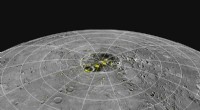
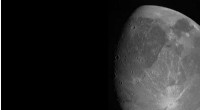
* The Moon's Motion: The moon orbits the Earth, causing its apparent position in the sky to change dramatically over a single night. It rises in the east, traverses the sky, and sets in the west. This movement is due to the Earth's rotation and the moon's orbit.
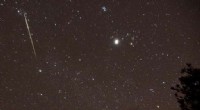
* Star Motion: Stars are incredibly far away. While they do move within our galaxy, their distances are so vast that their apparent movement across the sky is extremely slow. Over a single night, you wouldn't notice any significant movement. Even over hundreds or thousands of years, the changes are subtle.
* Earth's Rotation: What we perceive as the stars moving is primarily caused by the Earth's rotation. As our planet spins, we see the stars seemingly rotate around the celestial poles (North Star in the northern hemisphere).
Key Differences:
* Distance: The moon is much closer to Earth than the stars.
* Orbital Speed: The moon orbits the Earth much faster than the stars move relative to us.
* Perspective: We perceive the moon's movement more drastically due to its closer proximity and faster orbit.
While stars do move, their movement is so gradual it's imperceptible on a human timescale. To see them move significantly, you would need to observe over very long periods.