Stars:
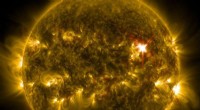
* Main Sequence Stars: These are the most common type of star, including our own Sun. They fuse hydrogen into helium in their core, producing energy.
* Giant Stars: These are stars that have exhausted their core hydrogen and expanded significantly.
* Supergiant Stars: These are even larger than giant stars, with incredibly high luminosities.
* White Dwarfs: These are the dense remnants of low-mass stars after they have shed their outer layers.
* Neutron Stars: These are incredibly dense, rapidly rotating stars formed from the collapse of massive stars.
* Black Holes: These are regions of spacetime where gravity is so strong that nothing, not even light, can escape.
Other Stellar Objects:
* Nebulae: Clouds of gas and dust, some of which are the birthplaces of new stars.
* Star Clusters: Groups of stars held together by gravity, classified as either open clusters (loosely bound) or globular clusters (tightly bound).
* Planetary Nebulae: These are the expanding shells of gas ejected by dying stars.
* Supernova Remnants: The expanding clouds of debris left behind after a star explodes.
Galaxies:
* Dwarf Galaxies: Smaller galaxies that orbit the Milky Way, such as the Sagittarius Dwarf Elliptical Galaxy and the Canis Major Dwarf Galaxy.
Beyond these, the Milky Way also contains:
* Dark Matter: An invisible substance that makes up the majority of the galaxy's mass, but does not emit or absorb light.
* Cosmic Rays: High-energy particles that travel through space.
Important Note: This is not an exhaustive list. The Milky Way is a constantly evolving system, and astronomers are still discovering new and fascinating objects within it.