Objects That Emit Light
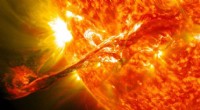
* Stars: These are giant balls of hot gas that undergo nuclear fusion in their cores, generating enormous amounts of light and heat. The color of a star depends on its temperature.
* Nebulae: These are clouds of gas and dust, often illuminated by nearby stars. Some nebulae are regions of active star formation.
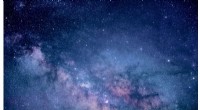
* Galaxies: Composed of billions of stars, galaxies emit light as a collective whole. Different types of galaxies emit light differently.
* Active Galactic Nuclei (AGN): These are the incredibly bright centers of some galaxies, powered by supermassive black holes. They emit light across the electromagnetic spectrum, from radio waves to gamma rays.
* Pulsars: These are rapidly rotating neutron stars, emitting beams of radiation that sweep across space like a lighthouse.
* Supernova Remnants: The expanding debris from exploding stars. They emit light and other radiation for centuries after the initial explosion.
* Quasars: Extremely distant and luminous objects, thought to be powered by supermassive black holes at the centers of galaxies.
Objects That Reflect Light
* Planets: Planets don't produce their own light, but they reflect light from their host star.
* Moons: Like planets, moons shine by reflecting light from their host star.
* Asteroids: These rocky bodies in the asteroid belt reflect sunlight.
* Comets: Comets are icy bodies that reflect sunlight. When they approach the sun, they also develop a tail of gas and dust that can scatter and reflect sunlight.
* Interstellar Dust: Tiny particles of matter scattered throughout space, which can reflect and scatter light.
Note:
* The amount of light an object emits or reflects depends on its size, composition, and distance from us.
* Some objects, like black holes, do not emit or reflect any light. They are only detectable through their gravitational influence on surrounding matter.
I hope this explanation helps! Let me know if you have any other questions.