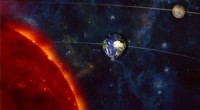
Immediate Effects:
* No Sunlight: The Earth would be plunged into perpetual darkness. The only light source would be the stars and the occasional flash of lightning. This would severely disrupt plant life, which relies on sunlight for photosynthesis.
* Freezing Temperatures: Without the Sun's warmth, Earth's temperature would plummet rapidly. Within a few weeks, the surface would be frozen solid, except for the very deep ocean trenches.
* Loss of Gravity: Technically, the Earth wouldn't *lose* gravity, but its orbit around the Sun is a major factor in balancing the gravitational forces within the solar system. Without the Sun's pull, Earth's gravity would become more irregular, potentially leading to changes in the Earth's shape.
Long-Term Effects:
* Death of All Life: The lack of sunlight and the freezing temperatures would make it impossible for most life to survive. The only organisms that might stand a chance would be extremophiles (life forms that thrive in extreme conditions) in the deepest parts of the ocean.
* The Earth's Fate: Without the Sun's gravity, the Earth might be pulled by other celestial objects like Jupiter or even flung out of the solar system entirely.
In Summary:
Stopping Earth's orbit around the Sun would be a disastrous event. It would result in a rapid descent into darkness, extreme cold, and ultimately the demise of all life on Earth. The planet itself might even be ejected from the solar system.
It's important to note that this is a hypothetical scenario. It is extremely unlikely for the Earth to stop orbiting the Sun. The forces that govern our solar system are incredibly stable.