Here's how:
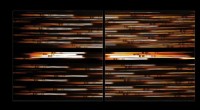
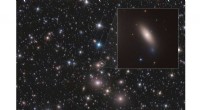
* Measuring distances: Hubble observes distant galaxies and measures their redshifts, which tells us how fast they are moving away from us. This information is used to estimate the distance to these galaxies.
* Determining the expansion rate: By combining the redshift measurements with the distance measurements, scientists can calculate the expansion rate of the universe, known as the Hubble Constant.
* Calculating age: The Hubble Constant is inversely proportional to the age of the universe. Using the most accurate value of the Hubble Constant, scientists can calculate the age of the universe.
Current estimates:
Based on the most recent data from the Hubble Telescope and other observations, the age of the universe is estimated to be 13.787 ± 0.020 billion years.
Important note: This is an estimate, and scientists continue to refine their measurements and calculations.